

A raw quartz ring asks for something slightly different from its wearer. A faceted stone is cut to shed knocks and sit low and smooth; a raw crystal keeps the ridges, points and internal fractures it grew with, and those natural edges catch on things a polished gem would shrug off. Add a metal setting that grips an irregular shape, and you have a piece that is sturdy enough for daily wear but not indifferent to how you treat it. Quartz sits at about 7 on the Mohs hardness scale, which means it resists scratching well. Hardness, though, isn't toughness. A crystal with a long point or a visible internal fracture can break with one unlucky knock, and the damage rarely happens dramatically. It happens while you're rinsing a mug or digging for your keys.
What follows are the five mistakes that come up again and again, along with fixes that take seconds rather than a whole change of lifestyle.
1. Treating Raw Quartz Like a Polished Gemstone
Polished stones are shaped to be forgiving. Their surfaces are rounded, their edges softened, and a glancing blow tends to slide away. A raw quartz ring keeps its terminations and its textured faces, and those sharp little edges are exactly where chips start.
The practical shift is awareness of where your hand is. Don't drum your fingers on a granite countertop. Don't use the ring hand to lever open a stuck drawer or tap a phone screen on a table edge. When you're hauling grocery bags, carrying a laundry basket with a hard plastic rim, or pushing a heavy door, use the other hand or turn the ring inward so the stone faces your palm. Small habits, repeated, matter more than one careful day.
Watch for the quiet moments
Most chips come from contact you didn't plan: the edge of a car door, a shopping cart handle, the rim of a washing machine. If you're doing something where your hand is going to work against hard surfaces, take the ring off first and put it somewhere deliberate, not in a pocket with your keys.
2. Letting Cleaning Products and Abrasives Do the Slow Damage
Dishwashing liquid on its own is gentle. The trouble is everything that comes with it: bleach-based sprays, ammonia glass cleaners, scouring powders, descalers, oven cleaners. These don't usually destroy quartz outright, but they attack the metal holding it, dull the surface over time, and leave residue packed into the rough texture of a raw stone where a soft cloth can't reach.
Lotions, sunscreen and hairspray matter too. They build up in the crevices of an unfaceted surface and make the crystal look cloudy when it isn't.
- Pull the ring off before scrubbing bathrooms, ovens, sinks or grout.
- Wear gloves for anything with bleach or ammonia, and still consider removing the ring.
- Wash dishes with bare hands if you like, but rinse and dry the ring afterwards rather than leaving it wet.
- Apply lotion and sunscreen first, let them absorb, then put the ring on.
When the stone does look tired, clean it with lukewarm water, a drop of mild soap and a soft brush, then pat it dry. Skip the ultrasonic and steam cleaners unless a jeweller has specifically told you the stone is safe for them. Raw quartz with visible fractures is not the place to experiment.
3. Storing It Loose and Letting It Collide
Quartz can scratch gold, silver and softer stones, and it can chip against harder ones. A ring tossed into a bowl with three others spends every night knocking against metal and stone, and the damage accumulates in a way that's easy to miss until you look closely at a point that used to be sharp.
Give it its own space. A small fabric pouch is enough. If you use a jewellery box, choose a compartment where the stone doesn't touch anything else, and close the lid rather than leaving it out on the dresser where it will collect dust and get swept onto the floor. The same rule applies when you travel: one pouch, not the bottom of a toiletry bag next to a hairbrush.
4. Never Checking the Setting
Raw quartz is irregular, and setting an irregular stone takes more metal or wire than setting a calibrated one. Prongs and wire wraps shift with wear, and a stone that has loosened slightly will rock in its seat, wearing down the metal and putting pressure on the stone's weakest line.
Check it once a month, in good light. Look for gaps between metal and stone, dark marks around the prongs, or wire that has moved out of place. Gently press the stone with a fingertip to see if it moves. Notice whether it snags on a knit sleeve or catches your hair, because that is often the first sign rather than a visible gap.
If something feels loose, stop wearing the ring and take it to a jeweller. Tightening a setting is quick and inexpensive; replacing a chipped crystal is neither. While you're there, ask whether the ring can be resized, since many raw quartz designs with integrated bands cannot be adjusted easily. Better to know before you buy than after.
5. Wearing It Everywhere, All the Time
Some rings are designed to stay on through everything. Most raw quartz rings are happier with a few regular breaks. The gym is the obvious one, where dumbbells, bars and machine handles put direct pressure on a stone. Swimming comes close behind: chlorine and salt water are unkind to metal, and cold water makes fingers shrink, which is how rings end up at the bottom of a pool.
Heat deserves its own mention. A crystal with internal fractures does not enjoy sudden temperature changes, and going from a hot shower to a cold windowsill, or handling a pan straight from the oven, is exactly the kind of swing to avoid. Steam and saunas are the same story.
Take it off for these
- Sleeping, especially if you tend to rest your hand under your pillow or against a headboard.
- Showering, swimming, washing your hair, or sitting in a sauna.
- Gym sessions, cycling, gardening, and any DIY with tools.
- Cooking with high heat, and washing up afterwards.
- Applying makeup, lotions or hair products.
Keep a small dish by the sink and another by the bed, so taking the ring off is easy rather than an inconvenience you'll skip.
A Two-Minute Routine That Keeps a Raw Quartz Ring Looking Right
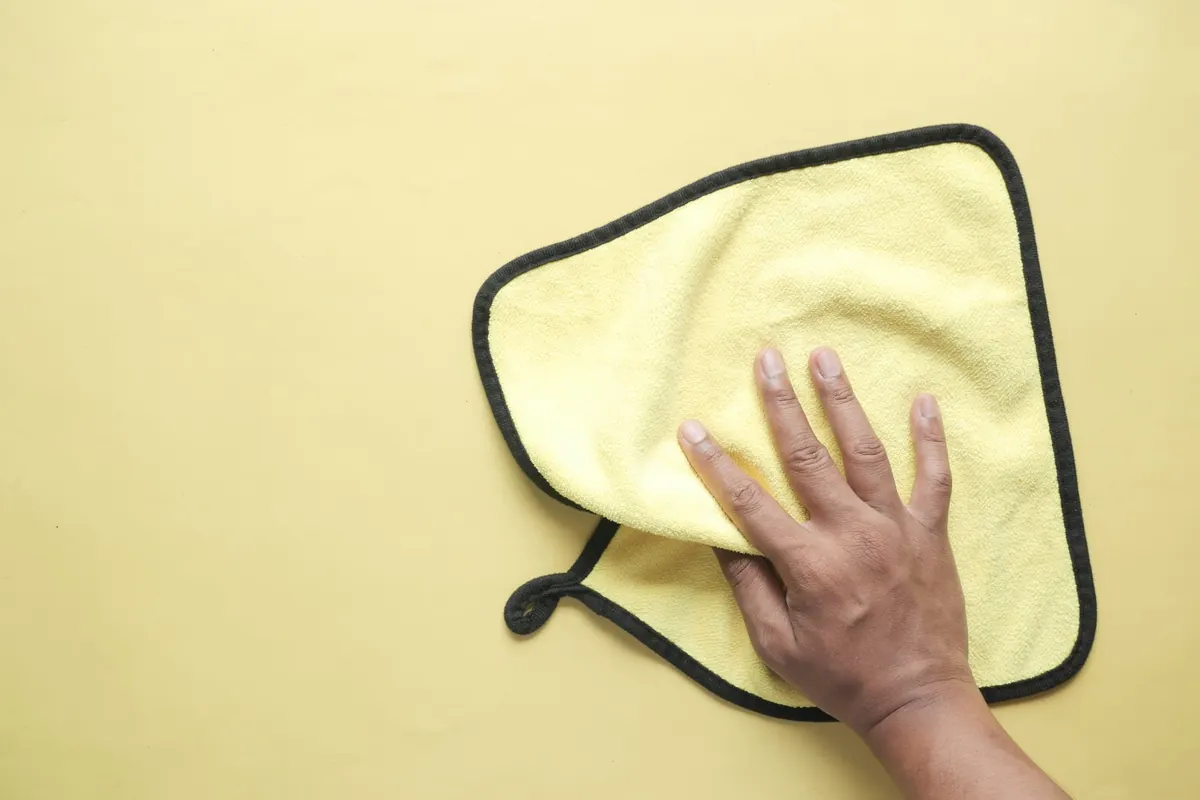
None of this requires much. Once a week, wipe the stone with a soft damp cloth and dry it thoroughly. Once a month, check the setting in daylight and give the ring a proper clean with lukewarm water and mild soap. Every night, put it in its pouch instead of on the nightstand. Before anything rough, wet or hot, take it off and put it somewhere you'll find it again.
Do those four things and the main risks, chipping, cloudiness, a loosened stone, simply stop coming up. A raw quartz ring shows its character through its imperfections, and a little care keeps those imperfections from turning into damage.
Photo: lubovlisitsa / Pixabay