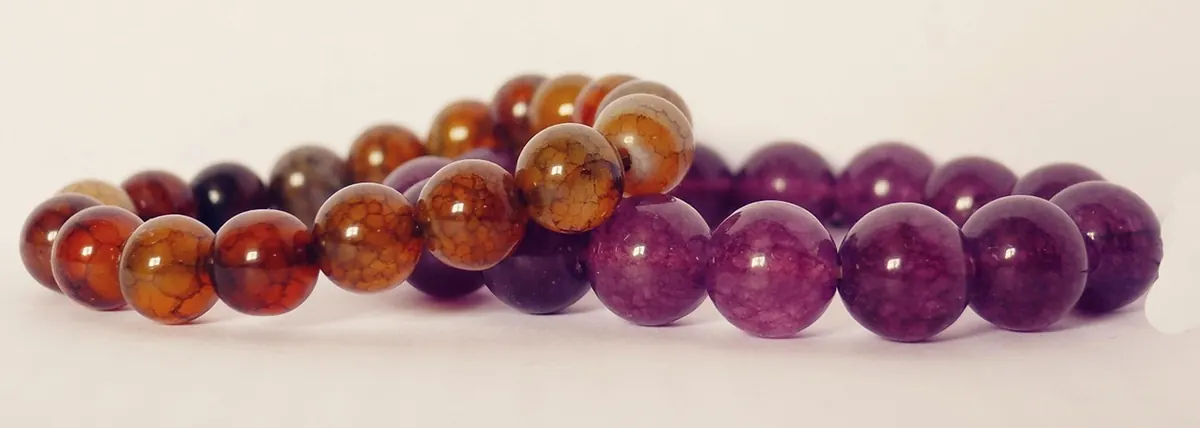


Two quartz bracelets can look like a decision or an accident, and the stones are rarely the reason. What separates a stack that reads as intentional from one that reads as clutter is usually order: which bead sits next to which, how far the sizes step down, and whether the metals have a clear job. Quartz is a hard stone, around 7 on the Mohs scale, which means it tends to win the argument with whatever it rubs against — including your silver spacers and the polished surface of the bead beside it. Layering well is not about owning fewer bracelets. It is about making a handful of small, repeatable choices before you fasten the first clasp.
Quartz Is Hard, and That Is the Problem
Because quartz is harder than glass, sterling silver, gold, pearls and most of the soft decorative stones you might want to mix in, it will slowly dull or scratch them. It is not harder than sapphire, diamond or ceramic, so a quartz bead can also pick up a scratch from a ceramic watch bezel or a diamond ring worn on the same wrist.
Quartz against quartz is a milder situation. Rose quartz, amethyst, smoky quartz and clear quartz all sit at roughly the same hardness, so they mostly polish one another rather than gouge. That is why a stack of three quartz bracelets tends to survive better than a quartz-plus-pearl combination. But there is a catch, and it is the one most people miss.
The grit problem
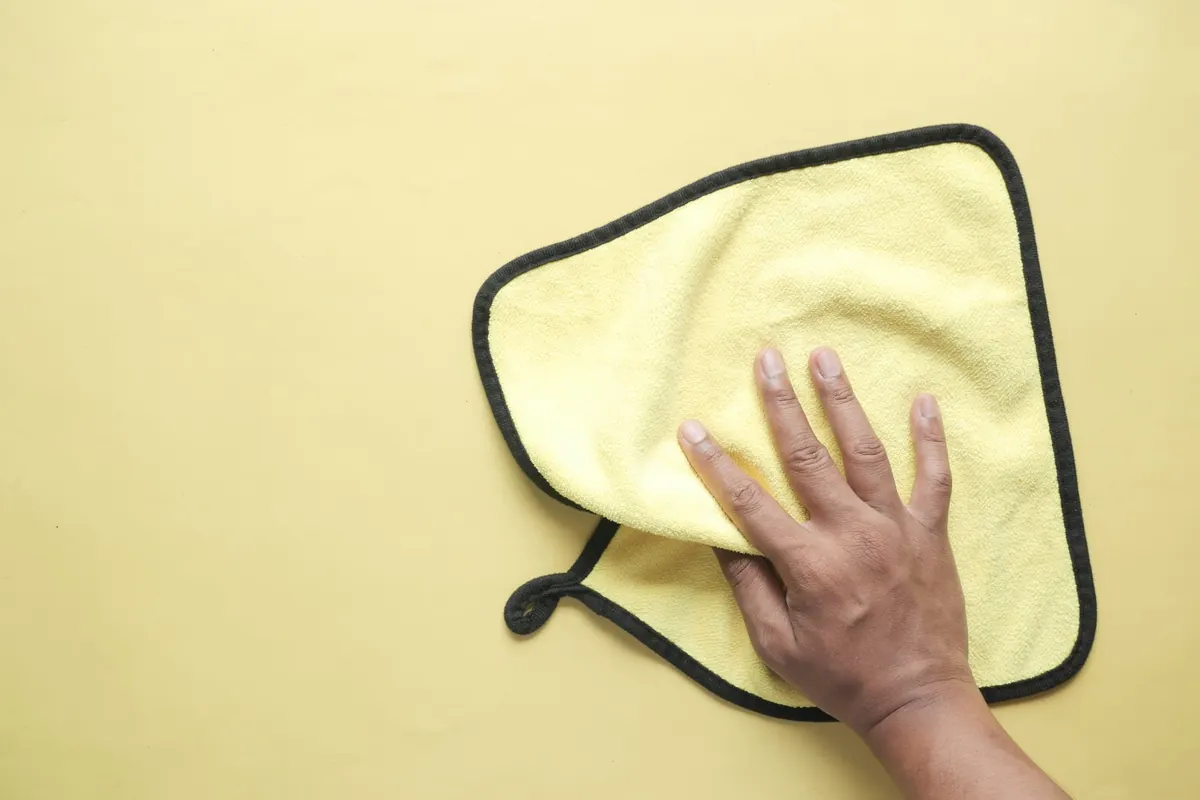
Dust, sand and salt are harder than they look, and they collect in the gap between two bracelets. Once a grain of grit is trapped, every movement of your wrist turns it into a tiny piece of sandpaper. This is why a stack can look fine for three months and then suddenly seem tired across every bead at once. Rinse beaded bracelets in lukewarm water when they have been to the beach or the garden, dry them fully with a soft cloth, and never put them away damp.
Grade the Beads by Size First
Size is the fastest fix for clutter and the one people skip. Before you think about color, put your bracelets on a table in order of bead diameter and see what you actually own.
The largest piece becomes the anchor. Wear it closest to your hand, where a wider bead looks deliberate rather than misplaced, and let the others step down from there. A stack of 10 mm, 8 mm and 6 mm beads tapers cleanly. A stack of 12 mm, 10 mm and 4 mm does not — the small bracelet looks like it wandered in from another outfit. If your sizes jump by more than about 2 mm at any point, either accept the break on purpose and put a metal cuff in the gap, or add a middle size.
Fit matters just as much. A bracelet with a bead or two of slack slides over the wrist bone and knocks into its neighbors all day; one that leaves an elastic mark sits still but takes all the pressure in one place. Aim for a gap you can just slide a fingertip under. If your wrist is between sizes, go with the larger and add a thin spacer rather than the smaller.
Mix Textures Without Grinding Them Together
Smooth round beads are the quietest thing you can wear. Faceted beads catch light beautifully, but every edge is a small scraper working against whatever sits beside it. The practical rule: one heavily faceted or carved piece per stack, and give it a smooth neighbor rather than another faceted strand.
Combinations that behave well:
- Smooth rounds in graded sizes, with a single faceted focal bead as the anchor.
- One faceted quartz bracelet next to a leather or waxed cord wrap, which absorbs contact.
- A polished bracelet worn on the opposite wrist from a charm bracelet — moving charms are the most abrasive thing most people own.
- A matte or brushed metal cuff as the outer layer, where it takes the knocks instead of the beads.
Combinations that wear badly within a few months: two faceted strands side by side, quartz beads rubbing against pearls or opal, and anything stacked directly against a watch with a steel case. If you love the look of two faceted pieces together, wear them with a smooth 3 mm spacer between them and accept that the spacer is the part that will dull first.
Balance Metal Tones Like Fabric, Not Uniforms
You do not need to match your metals, but you do need a dominant one. Pick a primary tone — warm gold, brass, bronze, rose gold on one side; silver, steel, white gold on the other — and let it occupy roughly three quarters of the metal you are wearing. The remaining quarter can be a deliberate contrast: a single cool silver spacer through a warm stack reads as a choice, while an even split reads as indecision.
Finish matters as much as tone. Three high-polish pieces next to each other compete for the same reflection and blur together. Mix a polished bracelet with a brushed or matte one and the stack gains depth without gaining another bead. Bridge pieces help when you genuinely want both tones: a bracelet with mixed-metal beads, a leather cord with a gold clasp and a silver bead, or a strand of dark smoky quartz that sits comfortably with either family.
Before you commit, lay the pieces on a white cloth in daylight. Colors that look harmonious in a jewelry box can turn muddy under real light, and this five-second check has saved more outfits than any rule.
Build the Stack in Order
- Anchor. Choose the largest, simplest bracelet and put it closest to your hand.
- Texture. Add one piece with a different surface — faceted, matte, carved — not a second piece of the same finish.
- Metal. Add one metal element in your dominant tone. One is usually enough; two only if one is very thin.
- Spacer. If two hard pieces must touch, put a smooth 3 mm bead or a soft cord between them.
- Limit. Three to five bracelets is the comfortable range for daily wear. Past that, friction rises faster than the visual gain, and the stack starts sliding over your hand.
A workable example: a 10 mm smooth smoky quartz anchor, an 8 mm rose quartz bracelet, a 6 mm faceted clear quartz, and a thin brushed silver cuff on the outside. Warm and cool in the right proportion, one faceted piece, and the cuff takes the wear.
Small Habits That Prevent Wear
- Bracelets go on last and come off first, after perfume, lotion and hairspray have dried.
- Take the stack off for gardening, gym sessions and dishes. Impact chips facet edges far faster than friction dulls them.
- Check elastic every few months by stretching it gently. A stretched band lets beads collide harder, and a snapped one loses beads.
- Store bracelets flat or in separate pouches. A jumbled drawer is a slow-motion abrasion test.
- Wipe beads with a dry soft cloth rather than a jewelry polishing cloth, which can leave residue in drilled holes.
- Give the stack a rest day. Rotating two or three combinations keeps each one looking new for longer.
A Stack You Can Live In
The best layering is the kind you stop thinking about by mid-morning. Choose one anchor size, one texture that contrasts with it, and one metal tone that carries most of the weight. Keep a smooth spacer between anything hard, wash out the grit, and stop at five. Do that and your quartz bracelets will keep their polish, your silver will keep its shine, and the whole thing will look like you meant it — because you did.
Photo: Luis Quintero / Pexels