
Quartz is the most forgiving place to start a jewelry collection. It appears in more colors than most beginners expect — milky white, soft pink, tea brown, deep purple, warm yellow — and it takes a polish that makes even an inexpensive piece look considered rather than accidental. On the Mohs scale it sits at about seven, which means it is hard enough for regular wear but still worth treating with a little care.
The seven pieces below are not a shopping list to finish in one afternoon. They are a sequence. Buy the one you will actually wear this month, live with it for a while, and let it tell you what belongs next to it. That approach almost always produces a collection that looks like a person rather than a catalog page.
1. Start With a Clear Quartz Pendant
If you only buy one thing, buy this. Clear quartz is neutral, so it goes with everything you already own, and a pendant is the easiest form of jewelry to wear without thinking about it. Look for a stone between roughly 1.5 and 2.5 cm long: large enough to read from a distance, small enough that it does not fight with your neckline.
Two shapes do most of the work. A faceted round or oval catches light and reads as classic. A rough or gently polished point reads as more modern and a little more casual. Either way, choose a bezel setting — a thin rim of metal wrapping the edge of the stone — over open prongs if you plan to wear it daily. Quartz chips at the edges when it knocks against a desk, and a bezel hides that damage before it starts.
For chain length, 45 cm (about 18 inches) sits just below the collarbone and flatters almost every top. A 40 cm chain is better with high necklines; a 50–55 cm chain works over a plain knit. Sterling silver or 14k gold-fill are the sensible metals at the entry level; heavy gold plating will eventually wear at the clasp and look tired.
2. Rose Quartz Beads You Can Actually Wear Daily
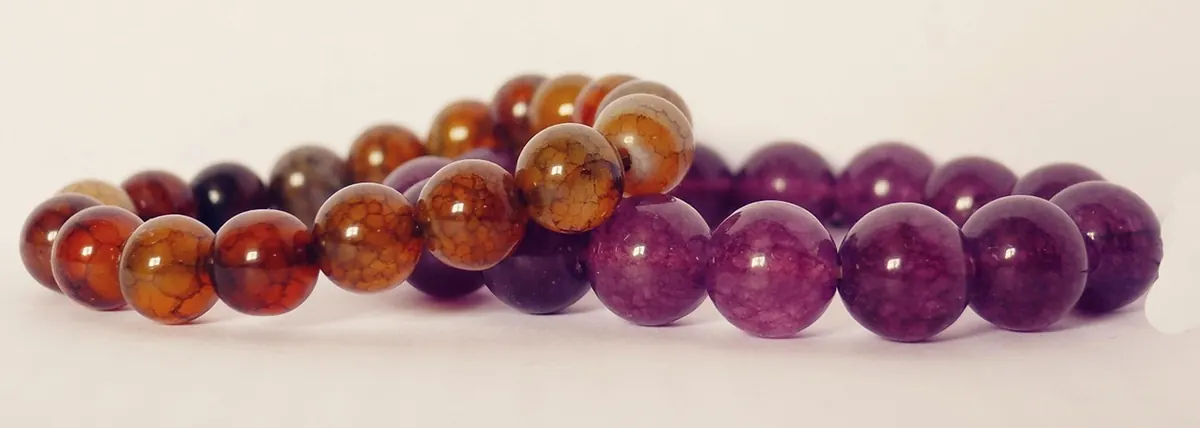
A strand of rose quartz beads is the piece beginners underestimate and then wear constantly. The color is soft enough to read as neutral, and a bead bracelet slips on in a second when you are running out the door.
Stick to 6–8 mm beads for a bracelet. Anything under 6 mm looks delicate but gets lost next to a watch; anything over 10 mm starts to feel like a statement and is harder to stack. Check the strand before you buy: beads should be evenly sized, the holes centered, and the elastic should snap back when you stretch it gently. Restringing is cheap, so a slightly loose bracelet is not a dealbreaker.
One practical note worth knowing: prolonged direct sunlight can gradually fade the palest pink stones. A windowsill in full summer sun is not the place to leave it. A drawer or a closed box is fine.
3. A Smoky Quartz Ring for Grounding Your Hands
Smoky quartz runs from pale champagne to near-black brown, and it is the quartz that most easily passes as fine jewelry. It also survives real life: it does not show fingerprints the way clear quartz does, and the color flatters both warm and cool metals.
Sizing and stacking
Get sized at a jeweler rather than guessing — a ring that pinches gets left at home. If you are choosing a wide band, go up half a size, because the extra metal takes room on your finger. When stacking, put the quartz ring on a different finger from rings set with softer stones such as pearl, opal or moonstone; quartz will scratch them over months of contact.
A low-set oval or cushion cut in a plain bezel is the most wearable version. It sits close to the hand, does not catch on sleeves, and looks deliberate with bare nails and a cotton shirt.
4. Small Quartz Earrings: Amethyst Studs and Citrine Drops
Amethyst and citrine are both quartz, which is useful to know when you are budgeting. You get the same durability and the same range of settings for a fraction of what the more famous purple and yellow stones cost.
Amethyst studs in 4–6 mm rounds are the most useful earrings a beginner can own. They add a quiet point of color to a plain outfit and work with everything from a t-shirt to a wedding guest dress. Buy them in the metal you wear most, and check that the posts are properly soldered — a loose post is the most common failure point in inexpensive studs.
Citrine drops do a different job. The warm yellow brightens gold jewelry and gives a face a lift in winter light. Choose a drop that ends above the jawline if you have a short neck, or just below it if you have a longer one; the goal is a visible gap of skin, not a stone resting on your shoulder.
5. One Statement Piece: Rutilated or Tourmalinated Quartz
This is where a beginner collection gets interesting. Rutilated quartz contains fine golden needles of rutile; tourmalinated quartz contains black needles of tourmaline. Both look like nothing else on a jewelry counter, and a single pendant or ring in either will carry an entire outfit.
Because the inclusions sit inside the stone, choose a setting that protects the surface: a closed bezel or a ring with a slightly recessed stone. Ask to see the piece against your skin before deciding — the needles read very differently against a white shirt than against a dark knit, and the right one will look almost lit from inside.
6. Pulling the Seven Together
The trick with quartz is restraint in number and confidence in scale. A few combinations that work reliably:
- Desk to dinner: clear quartz pendant on a 45 cm chain, amethyst studs, rose quartz bead bracelet. Nothing competes; everything reads.
- Weekend: smoky quartz ring, citrine drops, a single thin chain at 40 cm. Warm metals throughout.
- Evening: rutilated quartz pendant as the only focal point, plain small hoops, no bracelet. One loud voice is better than three.
- Layered necklaces: clear pendant at 45 cm, a bare chain at 40 cm, and nothing else above the collarbone.
Three rules cover most situations. Pick one focal piece per outfit and let the rest support it. Repeat your metal — mixing silver and gold works only when you do it deliberately, with at least two pieces in each tone. And match scale to your frame: a very large pendant on a fine chain looks unbalanced, and a tiny stone on a heavy chain disappears.
A Practical Way to Begin
Buy in order of wear, not order of excitement. Spend the most on the piece you will put on four days a week — for most people that is the pendant or the studs — and save on trend-driven shapes. Keep quartz away from harsh cleaners and ultrasonic machines, especially the included varieties; warm water, a drop of mild soap and a soft brush are enough. Store pieces separately in a pouch or a compartmented box, since quartz will scratch softer stones and softer metals over time.
Then stop shopping for a while. Wear the seven for a month, notice which one you reach for without thinking, and let that answer the question of what to add next. A collection built that way stays useful for years.
Photo: Castorly Stock / Pexels