
Two pendants sit side by side on a jeweler's tray. Both are quartz. One is a rough point the color of milk, its tip a small pyramid nobody sanded down. The other is a polished drop so clear you can read the grain of the table through it. Same mineral, same hardness, same seven on the Mohs scale. Almost everything else — how they look, how they age, how you clean them — comes down to a single decision: leave the surface rough, or smooth it until light passes through.
Here is what changes, what doesn't, and how to pick a finish you will still be happy with a year from now.
Appearance: What Changes the Moment Light Hits It
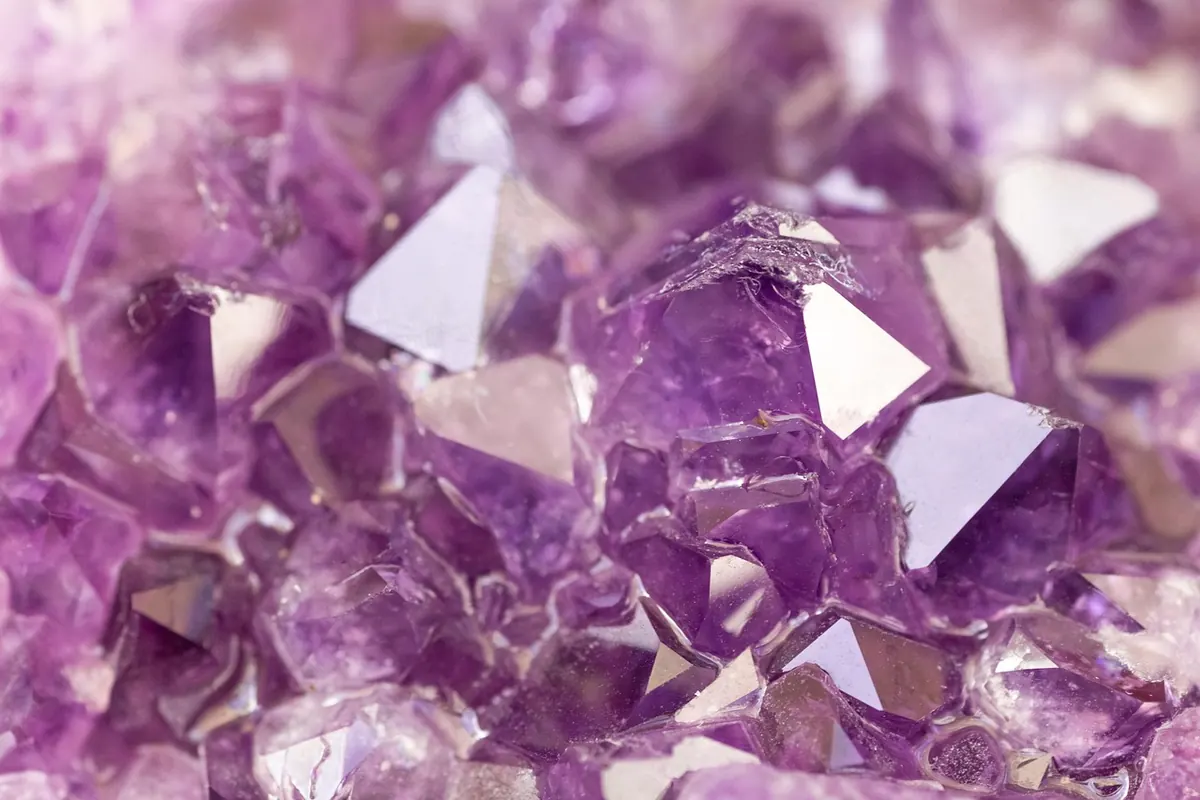
Raw quartz scatters light instead of letting it through. The surface reads matte, sometimes chalky, and a piece of milky quartz looks like a chip of weather — soft white with grey shadow in the fractures. You see structure: the pyramid tip, horizontal growth lines, a rust-colored stain near the base, a crust of tiny drusy crystals on one flank.
Polishing does the opposite. Light enters the stone, and color that looked dusty in the rough suddenly has depth. A raw amethyst point can read as a vague violet; the same material polished shows its zoning, bands of grape and near-white, sharply. Smoky quartz goes from brownish-grey to something close to dark honey. Rutilated quartz is the clearest example: in the rough the needles are a dull texture, and polished they become gold lines suspended in a clear window.
Size, shape and matching
A raw stone keeps all its volume, so it looks bigger and heavier than a polished stone of the same weight. Polished quartz tends to look leaner and more deliberate, which is why cut stones suit minimal designs. There is a practical side too: polished stones can be cut to repeatable shapes, so matching a pair of earrings is straightforward. Raw pieces are individuals, and pairing two points for size and color takes patience — which is exactly what makes a raw pair feel like yours.
How Each Finish Feels in Daily Wear
This is the part buyers underestimate. A polished cabochon or faceted drop lies flat against the skin and slides under a sleeve. A raw point does not. It has edges, and those edges find knitwear, fine hair, scarves, and the inside of a coat pocket. If you wear a lot of wool, or you push long hair back a hundred times a day, a raw-shouldered pendant can become a small annoyance by the end of the week.
Where the piece sits matters more than the finish itself. Earrings and pendants are protected by position. Rings and bracelets are not — they meet doorframes, shopping carts, and the bottom of a bag.
The two finishes also age differently on the body. A raw surface picks up skin oils and hand cream and looks dull and slightly darker where you touch it most; a quick wash brings it back. Polished surfaces show every fingerprint, but a wipe with a dry cloth is enough. Over months, polished quartz collects fine hazy scratches that soften its sparkle, while raw quartz simply looks more worn in, which many people prefer.
Durability: Same Hardness, Different Weak Points
Quartz sits at 7 on the Mohs hardness scale, harder than glass and softer than corundum or diamond. That number does not change with the finish. What changes is how the piece fails when something goes wrong.
Raw quartz
The vulnerable spots are thin edges and tips. A raw point that slips off a nightstand usually does not shatter — it loses its tip, or a corner, in a way that is visible from across the room. Stones with obvious internal fractures, heavy inclusions, or very slender terminations are best treated as delicate and kept for earrings and pendants rather than rings.
Polished quartz
Polished quartz rarely chips in the dramatic sense; it scratches and dulls. A polished ring worn daily develops a scuffed patch where it rubs, and faceted edges slowly round off. The damage is gradual and easy to miss until you compare it with a new piece. A protective setting — a bezel, or prongs that cover the girdle — does more for a polished stone than any care routine.
Neither finish is indestructible. Take either one off before moving furniture, gardening, or the gym.
Cleaning and Care for Each Finish
The basic routine is the same for both: lukewarm water, a drop of mild dish soap, a soft brush, a rinse, and a pat dry with a cloth that does not shed lint.
Raw quartz needs two extra minutes. Use a soft toothbrush to get into the crannies around the base of a point, under a prong, and around any drusy crust, then let the piece air dry completely before putting it away. Soap residue and moisture caught in a rough surface collect dust and make the stone look grey.
Skip ultrasonic and steam cleaners for raw quartz, and for any quartz with visible fractures or inclusions. The vibration and heat are not worth the risk when a bowl of soapy water does the job. Keep both finishes away from chlorine, perfume, hairspray, and household cleaners.
Storage matters more than most people expect. Raw points are abrasive, and a loose one in a jewelry box will scratch polished stones, metal, and other raw pieces.
- Put jewelry on last, after lotion, perfume, and hairspray.
- Take it off first: before showering, swimming, washing dishes, or sleeping.
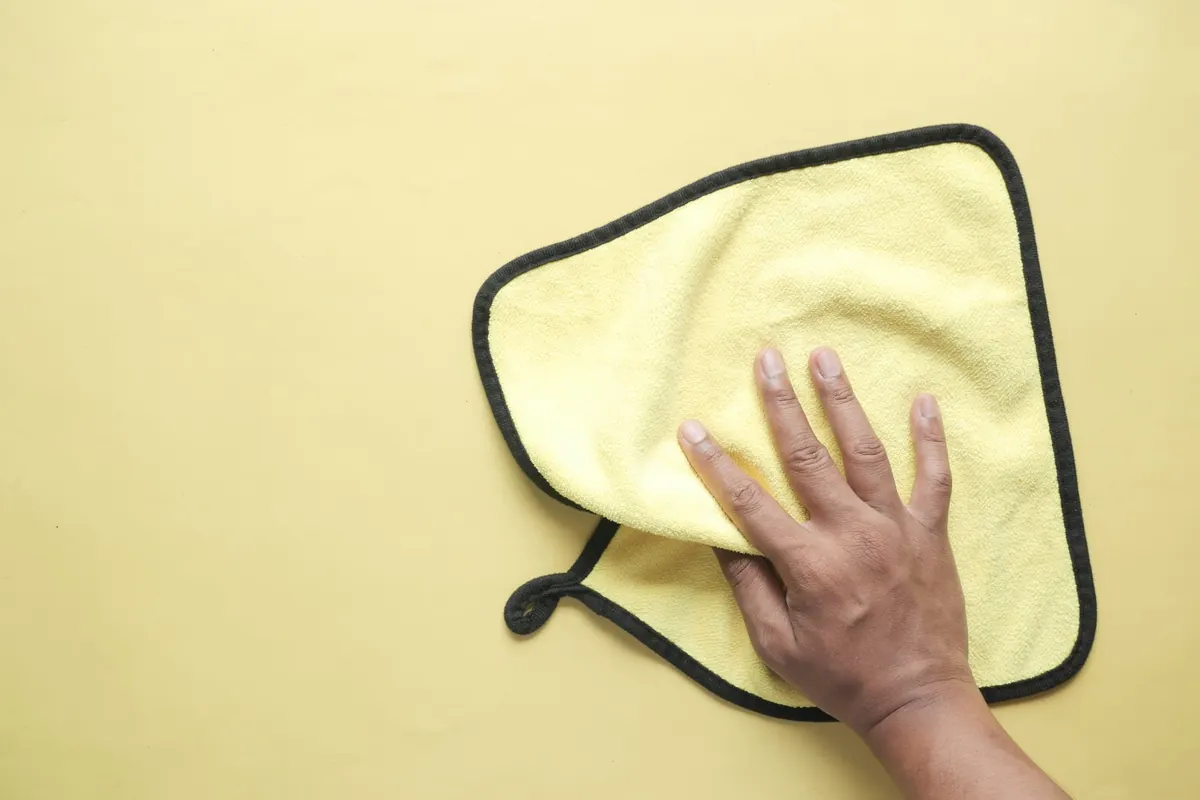
- Wipe polished pieces with a dry microfiber cloth after each wear.
- Brush raw pieces every week or two, then dry them fully before storing.
- Store each piece in its own soft pouch, and keep raw points away from polished stones.
Choosing Between the Two
There is no better finish, only a better match for how you live. Run through these questions before you buy:
- How often will you wear it? Daily wear favors polished; occasional wear gives raw room to be raw.
- Where does it sit? Earrings and pendants can be delicate. Rings and bracelets cannot.
- Do you work with your hands, wear knits, or have long hair? Each one makes a raw edge more noticeable.
- Do you want the piece to read as a specimen or as a gem? A raw point is a small landscape; a polished stone is a lens.
- Are you building a set? Polished stones are easier to match across pieces.
A rough guide: raw quartz earns its place in pendants, earrings, and statement rings worn a few times a week. Polished quartz earns its place
Photo: KAVOWO / Pixabay